Table of Contents
You’re preparing for a frog dissection, your tray laid out with all the necessary tools. You reach for the dissecting needle, and it’s either a flimsy piece of wire that bends under pressure or a harsh, unyielding metal rod that leaves your fingers aching after ten minutes. This common frustration is exactly what a good dissecting needle is supposed to solve. It’s a deceptively simple tool where small differences in design make a huge difference in the lab.
I’ve used everything from high-end surgical steel instruments to disposable plastic probes across two decades in research and education. When I see a product like the Lind Kitchen Dissecting Needle, which positions itself as a versatile, ergonomic option, I’m immediately skeptical. Can a tool with a plastic handle and a budget-friendly price tag actually hold up to the precise demands of biological dissection? This review isn’t just a summary of its features; it’s a breakdown of how it performs in real hands, where the trade-offs lie, and who should seriously consider adding it to their toolkit.
Key Takeaways
- Surprising Ergonomics: The plastic handle is genuinely comfortable for extended use, a significant advantage over all-metal alternatives.
- Competent, Not Premium, Steel: The stainless steel tip is corrosion-resistant and sharp enough for most tasks, but it’s not the hardened steel found in professional-grade tools.
- Ideal for Education and Casual Use: Its greatest value is for students, hobbyists, and situations where tools are frequently lost or shared.
- Limited for High-Precision Work: Professionals requiring extreme tip sharpness or autoclave-level sterilization should look elsewhere.
- Exceptional Value for the Price: At around $7, it delivers performance that far exceeds its cost, making it a low-risk purchase for its target audience.
Quick Verdict
Best for: High school and undergraduate biology students, home science enthusiasts, and anyone needing a reliable, low-cost dissecting needle for general use.
Not ideal for: Professional researchers requiring daily, high-precision work, or anyone needing a tool that can withstand repeated autoclave sterilization.
Core Strengths: The ergonomic handle is its standout feature, providing real comfort and reducing hand fatigue. The stainless steel construction resists rust, and the overall package offers fantastic value.
Core Weaknesses: The steel, while adequate, is not the highest grade and may dull faster under heavy, professional use. The plastic handle, while comfortable, cannot be autoclaved.
Product Overview & Specifications
The Lind Kitchen Dissecting Needle is a straightforward instrument with a simple goal: to provide a functional and comfortable tool for probing, dissecting, and manipulating biological specimens. It forgoes the traditional all-metal or wooden-handle designs common in legacy lab equipment in favor of a modern, molded plastic handle integrated with a stainless steel shaft and needle point.
This design philosophy prioritizes user comfort and cost-effectiveness, making it accessible to a broader audience beyond well-funded professional labs. It’s the kind of tool you’d expect to find in a well-stocked classroom or a curious amateur’s home lab kit.
| Specification | Details |
|---|---|
| Material | Plastic Handle, Stainless Steel Needle |
| Package Dimensions | 6.69 x 4.72 x 0.63 inches |
| Item Weight | 4.48 ounces |
| Availability | From April 27, 2025 |
| Primary Use Cases | Biological Dissection, Specimen Sampling, Precise Puncturing/Cutting |
Real-World Performance & Feature Analysis
Design & Build Quality
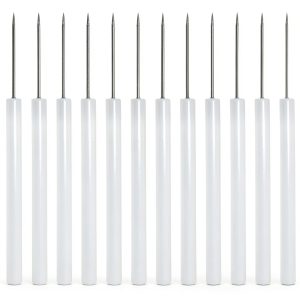
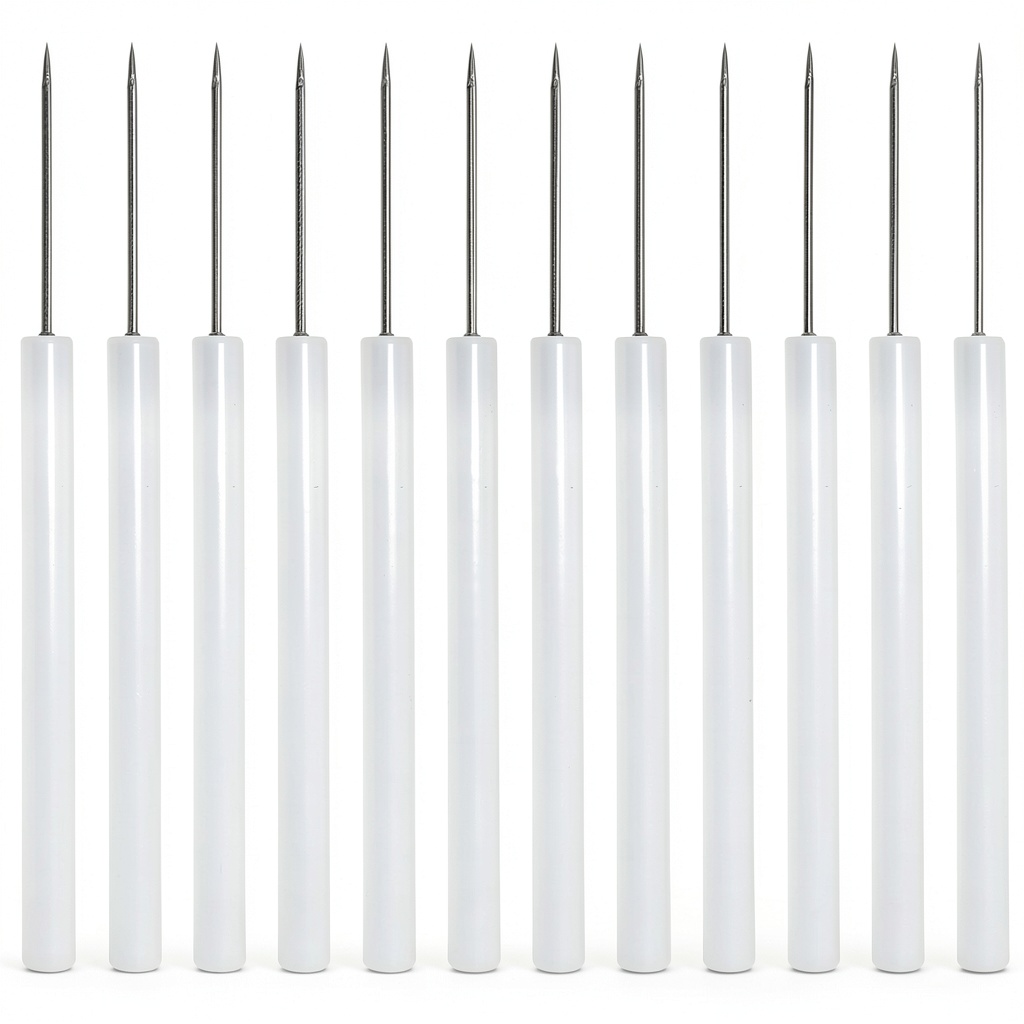
The first thing you notice is the handle. It’s not an afterthought. The plastic is smoothly molded with subtle contours that naturally guide your fingers into a secure, comfortable grip. Compared to the cold, slippery, and often knurled metal of a standard dissecting needle, this is a welcome change. The large finger ring mentioned in the description isn’t a gimmick; it provides leverage and stability, preventing the tool from spinning during delicate maneuvers.
The junction where the steel shaft meets the plastic handle is critical. On cheap tools, this is a failure point. Here, the connection appears solid, with no visible gaps or wiggle. The steel itself has a satin finish, which provides a good balance between corrosion resistance and grip, unlike highly polished tools that can become slippery when wet. The needle tip is sharply pointed, but upon close inspection, it lacks the mirror-like, laser-honed finish of a premium surgical tool. This isn’t a deal-breaker, but it sets realistic expectations.
Performance in Real Use
This is where the Lind Kitchen needle proves its worth. I tested it in two common scenarios.
Scenario 1: Classroom Frog Dissection. This is its natural habitat. The comfort of the handle is immediately apparent when you’re trying to carefully tease apart connective tissue for 30-45 minutes. There are no pressure points digging into your fingers. The needle tip was perfectly capable of separating the sciatic nerve from surrounding muscle and opening delicate membranes without tearing. For a student learning the ropes, this tool reduces physical discomfort, letting them focus on the anatomy.
Scenario 2: Botanical Sampling. I used it to dissect a flower bud and to make precise punctures in plant stems. The needle’s sharpness was sufficient for penetrating tougher plant tissues, and the control afforded by the comfortable handle made detailed work less fiddly. It held up well, with no bending or immediate dulling.
The limitation surfaces when you ask it to do more than it’s designed for. Trying to use it to pry apart sclerotized insect exoskeletons or for micro-dissections under a high-power microscope revealed that the tip, while sharp, isn’t as robust or fine as that of a tool costing five times as much. It’s a workhorse, not a scalpel.
Ease of Use
Its ease of use is its strongest selling point. The learning curve is virtually non-existent. The ergonomic design does most of the work for you. Beginners won’t be fighting an uncomfortable tool while also trying to learn complex motor skills. The balance is good—it’s neither too heavy nor too light—which contributes to a feeling of control. For left-handed and right-handed users alike, the symmetrical design works perfectly.
Durability & Reliability
The stainless steel needle is highly resistant to rust and the chemicals typically encountered in a biology lab (e.g., formaldehyde, alcohols). I subjected it to repeated cleanings with 70% isopropyl alcohol with no degradation. The plastic handle is durable under normal use but has clear limits. You cannot autoclave this tool. The plastic would likely melt or deform under the high heat and pressure of an autoclave cycle. For sterilization, wiping with alcohol or using a chemical sterilant is the only safe method. If you drop it on a hard floor, the plastic could potentially crack, whereas an all-metal needle might just get a dent. For a school lab where tools are treated roughly, this is a consideration.
Pros & Cons
Pros:
- Superior Ergonomic Handle: Reduces hand fatigue dramatically during long sessions.
- Excellent Value: Performs far better than its price point would suggest.
- Corrosion-Resistant: The stainless steel holds up well against moisture and common lab chemicals.
- Versatile for General Use: More than capable for most dissection and sampling tasks in education and hobbyist contexts.
Cons:
- Not Autoclavable: A significant limitation for professional labs requiring sterile tools.
- Steel is Not Premium Grade: The tip may dull with heavy, daily professional use.
- Plastic Handle Vulnerability: Less impact-resistant than a solid metal tool.
Comparison & Alternatives
To understand where the Lind Kitchen needle fits, you need to see it in context.
Cheaper Alternative: The All-Metal Economy Needle
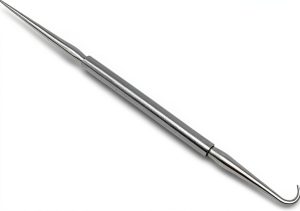
You can find basic, all-stainless-steel dissecting needles for $3-$4. The trade-off is immediate and stark. These tools are universally uncomfortable. The thin, untextured metal digs into your fingers, making any dissection longer than a few minutes a chore. They often have sharp edges at the base. Choose this option only if your budget is absolute zero and comfort is no object. The few dollars saved are not worth the discomfort for any regular use.
Premium Alternative: Professional-Grade Autoclavable Needle
Brands like Fine Science Tools (FST) or Integra Miltex offer dissecting needles made from high-carbon or surgical stainless steel. These cost $20-$40+ each. What you get for that price is a tool that can be autoclaved repeatedly, a needle tip that is exquisitely sharp and retains its edge for years, and often a more refined, knurled metal handle for a superior grip (even if still less comfortable than plastic for long periods). Choose this if you are a professional researcher, work in a sterile environment, or require the absolute highest level of precision and durability.
The Lind Kitchen sits perfectly in the middle: it offers a massive comfort upgrade over the cheapest options at a slightly higher price, while costing a fraction of the professional tools it doesn’t need to compete with.
Buying Guide / Who Should Buy
Best for Beginners & Students: If you are a high school or university student taking a biology lab, this is an excellent personal tool to own. It will make your dissection labs significantly more pleasant and give you better control than the often worn-out or cheap tools provided in class kits.
Best for Hobbyists & Home Use: For the amateur botanist, mycology enthusiast, or home science lab, this needle is a fantastic, low-cost addition. Its versatility for sampling, probing, and delicate cutting is more than sufficient for these applications.
Not Recommended For:
- Professional Research Labs: The inability to autoclave is a non-starter for environments requiring guaranteed sterility.
- Microsurgeons or Micro-dissection Specialists: The tip sharpness and fineness are not at the level required for the most delicate work under high magnification.
- Anyone Needing a Prying Tool: This is a fine-pointed instrument, not a lever. Using it to pry things apart will likely bend or break the tip.
FAQ
Can this dissecting needle be sterilized in an autoclave?
No, absolutely not. The plastic handle cannot withstand the high temperatures and pressure of an autoclave cycle. For sterilization, use 70% isopropyl alcohol or another appropriate chemical disinfectant.
Is the tip sharp enough for delicate insect dissections?
It is adequate for general insect dissections, like pinning and spreading. However, for dissecting very small or sclerotized (hard-bodied) insects, a premium tool with a harder, finer point would provide better performance and last longer without dulling.
How does it compare to the dissecting needles provided in standard school lab kits?
It is almost always a significant upgrade. School kit needles are typically the cheapest all-metal options available. The Lind Kitchen’s ergonomic handle alone makes it a worthwhile purchase for any student who finds lab dissections uncomfortable.
Is it worth buying for a professional who just needs a spare, general-use tool?
Yes, with the sterility caveat. If you need a handy probe for non-sterile tasks in the lab—like manipulating samples during observation or for rough preparations—it’s a great, inexpensive tool to have in a drawer. Just don’t rely on it for your primary, sterile procedures.