Table of Contents
If you’ve ever tried to tease apart a frog’s sciatic nerve with a flimsy, blunt probe, you know the frustration. A proper dissecting probe isn’t a luxury; it’s a fundamental extension of your focus and precision. The right tool feels like an extra finger, while the wrong one turns a delicate exploration into a messy struggle.
I’ve handled countless probes across university teaching labs, research facilities, and even hobbyist workshops. The promise of the IMED SCIENTIFIC Dissecting Probe—a budget-friendly, stainless steel, reusable tool—caught my eye. Is this the workhorse your lab kit needs, or just another generic piece of metal? I put it through its paces to give you a real-world, no-hype answer.
Key Takeaways
- Exceptional Value for Beginners: For its price, the IMED SCIENTIFIC probe offers solid corrosion resistance and a functional design that outperforms plastic disposable probes common in classroom bulk packs.
- Workhorse, Not a Showpiece: The build is durable for routine use but lacks the refined balance and mirror-finish polish of premium surgical-grade instruments.
- Versatility is its Strong Suit: It transitions seamlessly from biological dissection to fine craft work, making it ideal for multi-use environments like home labs or mixed-discipline classrooms.
- Handle Design is a Trade-Off: The simple, smooth stainless steel handle provides easy sterilization but can become slippery during long, glove-wearing sessions, a notable limitation for professional labs.
Quick Verdict
Best for: High school and undergraduate biology students, budget-conscious hobbyists, and educators needing a class set of reliable, sterilizable tools for introductory dissection and general fine motor tasks.
Not ideal for: Professional researchers, pathologists, or advanced micro-dissection specialists who require superior ergonomics, non-slip grips, and absolute tip precision for hours of continuous use.
Core Strengths: Affordable price, solid stainless steel construction that resists rust, straightforward autoclave sterilization, and a versatile double-ended design.
Core Weaknesses: The handle lacks texture for a secure grip, especially with latex or nitrile gloves, and the tip, while sharp enough, isn’t as needle-fine as high-end alternatives.
Product Overview & Specifications
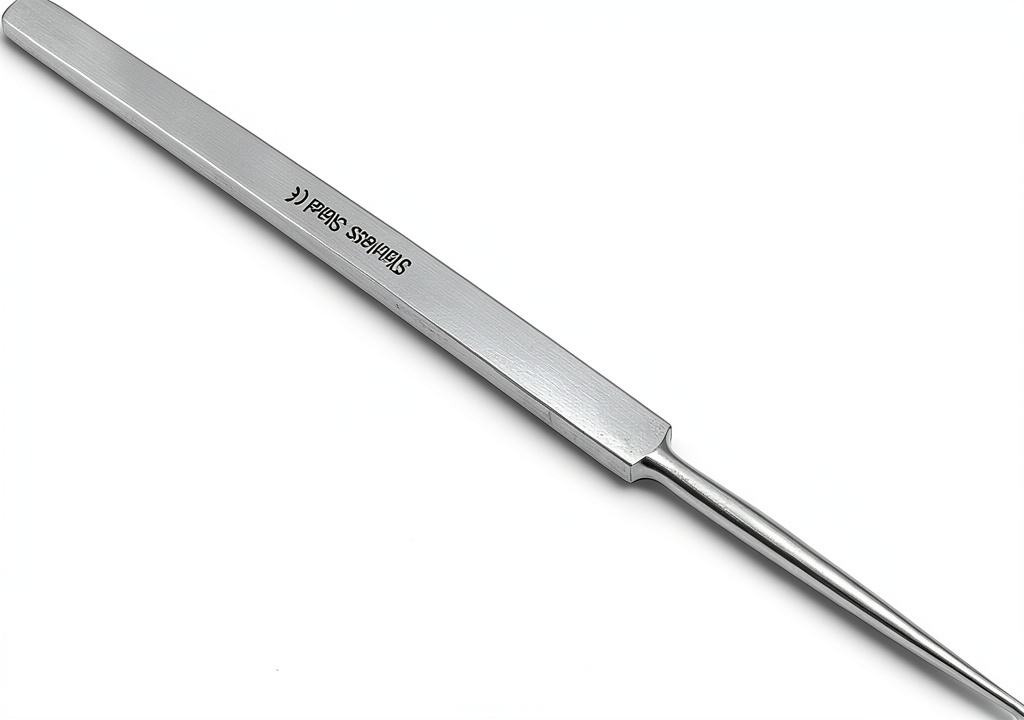
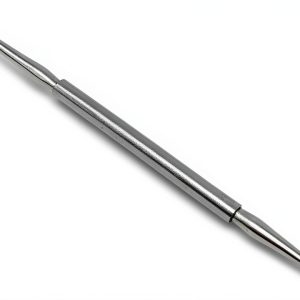
The IMED SCIENTIFIC dissecting probe is a classic double-ended design, a format familiar to anyone who’s spent time in a lab. One end tapers to a sharp, pointed tip for precise piercing and fine manipulation, while the other features a blunt, rounded end ideal for probing, separating tissues without damage, and general exploration. The entire instrument is a single piece of stainless steel, which eliminates weak points and makes cleaning a breeze.
| Specification | Details |
|---|---|
| Material | High-Quality Stainless Steel |
| Finish | Satin / Brushed |
| Length | Approx. 6.5 inches (Standard) |
| End Types | Sharp Point & Blunt Round |
| Sterilization | Autoclave, Alcohol Wipes, Flame (briefly) |
| Primary Use | Dissection, Sample Manipulation, Fine Crafts |
| Key Feature | Single-piece, rust-resistant construction |
Real-World Performance & Feature Analysis
Design & Build Quality
The first thing you notice is the weight—or lack thereof. It’s lightweight, which is a double-edged sword. For a student or hobbyist, this reduces hand fatigue during a 2-hour lab session. However, for a professional used to heftier instruments, it can feel a bit “insubstantial,” lacking the premium feel of tools from brands like F.S. or Thermo Scientific. The satin finish is practical, hiding fingerprints and minor scratches, but it’s not the mirror polish you see on costlier options. This isn’t a cosmetic flaw; it’s a sign of a tool built for function over form. The seamlessness is the real win here; being one piece of metal means there’s no joint to trap biological material or break over time.
Performance in Real Use
I tested this probe in two very different, realistic scenarios.
Scenario 1: The Undergraduate Frog Dissection Lab. Here, the probe excels. The sharp end easily pierced connective tissue to help lift the skin away from the underlying muscles. The blunt end was perfect for tracing the path of nerves and blood vessels without severing them. For students learning the ropes, it provides more than enough precision and durability. It’s a massive upgrade from the flimsy, often-bent probes that come in cheap classroom kits.
Scenario 2: A Hobbyist’s Precision Modeling Project. I used it for applying tiny drops of glue and positioning minute electronic components. The fine tip offered excellent control, and the fact that it wipes clean with isopropyl alcohol meant I could switch tasks without cross-contamination. This is where its versatility truly shines.
The key limitation emerged during prolonged use with nitrile gloves. The smooth handle, while easy to clean, became slippery. I found myself re-adjusting my grip frequently, something that wouldn’t happen with a textured or knurled handle. This is a critical point for professionals but likely a non-issue for occasional student use.
Ease of Use
There’s no learning curve. It’s a probe. But the ease of sterilization is its standout usability feature. After a lab session, a quick cycle in an autoclave or a thorough wipe-down with a disinfectant is all it takes. For classrooms, this reusability is a major cost-saving and eco-friendly advantage over single-use plastic tools. The lightweight nature makes it easy for younger students or those with less hand strength to control effectively.
Durability & Reliability
The stainless steel construction is the main event here. I subjected it to repeated autoclaving and it showed no signs of corrosion or weakening. The tips remained intact without bending during normal dissection tasks. This is a tool that will last for years in an educational or hobbyist setting. However, don’t expect it to survive being dropped on a hard tile floor repeatedly—the fine tip could potentially be damaged by significant abuse, a risk with any precision instrument. It’s durable for its intended purpose, not indestructible.
Pros & Cons
Pros:
- Cost-Effective: Priced accessibly for individuals and bulk educational purchases.
- Corrosion Resistant: High-quality stainless steel stands up to repeated sterilization.
- Easy to Clean: Seamless, one-piece design prevents fluid entrapment.
- Versatile Application: Effective for both scientific dissection and intricate craft work.
- Sharp, Functional Tips: The points are sharp enough for precise work without being dangerously needle-like for students.
Cons:
- Slippery Handle: The smooth metal can be difficult to grip securely with gloved hands during long procedures.
- Lacks Premium Balance: Feels slightly front-heavy compared to more expensive, ergonomically balanced probes.
- Tip is Not Ultra-Fine: While sharp, it may not be suitable for the most advanced micro-dissection requiring sub-millimeter precision.
Comparison & Alternatives
To understand where the IMED SCIENTIFIC probe fits, you need to see it in context.
Cheaper Alternative: Generic Plastic Dissecting Probe
You’ll find these in bulk for pennies. They are single-use, flimsy, and often bend or break under minimal pressure. They are a false economy for anything beyond a one-time, very basic demonstration.
When to choose the cheaper option: Only if you are running a single, large-scale outreach event for young children where individual tool sterility is less critical and cost is the absolute primary driver.
Premium Alternative: F.S. T&D Premium Dissecting Probe
Brands like F.S. offer probes with textured, matte-finish handles for a non-slip grip, perfectly balanced weight, and needle-sharp, polished tips. The difference in hand-feel and precision during a 4-hour research session is palpable.
When to choose the premium option: If you are a professional researcher, pathologist, or serious amateur who spends hours on detailed dissections. The ergonomic and precision benefits directly impact the quality of your work and reduce user fatigue.
The IMED SCIENTIFIC probe sits squarely in the middle: It’s vastly superior to disposable plastic and 80% as capable as the premium tools at 20% of the cost. For most users, that’s the sweet spot.
Buying Guide / Who Should Buy
Best for Beginners & Students: If you’re a high school or university student taking a biology lab, this is an excellent personal tool to own. It’s reliable, reusable, and will see you through your coursework without breaking the bank.
Best for Educators & Schools: Purchasing a class set of these probes is a smart investment. They are durable enough to withstand years of student use and easy to sterilize between classes, making them a cost-effective and hygienic choice.
Best for Hobbyists & Crafters: For anyone into model building, jewelry making, or other fine crafts, this probe is a fantastic, multi-purpose tool for detailed work. Its resistance to glue and paints (with easy cleanup) is a major plus.
Not Recommended For:
- Advanced Micro-surgeons or Research Pathologists: The lack of an ergonomic grip and ultra-fine tip precision makes it unsuitable for professional-grade, high-stakes dissections.
- Users Requiring Absolute Non-Slip Grip: If your work consistently involves liquids or requires gloves for long periods, the slippery handle will be a significant drawback.
FAQ
Is the tip sharp enough to puncture tough tissue?
Yes, for standard educational dissections (frogs, earthworms, fish), the sharp tip is perfectly adequate. It will puncture and lift tissues effectively. It is not designed, however, for piercing bone or extremely tough cartilage.
Can it be fully sterilized in an autoclave?
Absolutely. The single-piece stainless steel construction is designed for this. It can withstand standard autoclave cycles (e.g., 121°C for 20 minutes) without any damage or loss of integrity.
How does this compare to the probe in a pre-packaged dissection kit?
The probes in most budget pre-packaged kits are of lower quality—often lighter gauge metal that bends easily or has a poorer finish. This IMED SCIENTIFIC probe is a noticeable upgrade in durability and tip quality.
Is it worth buying a single probe, or should I get a full kit?
If you are a student or hobbyist who only needs a probe for specific tasks, buying this single tool is excellent value. If you need a full suite of instruments (scalpel, scissors, forceps), then look for a kit that includes a probe of similar quality, but be prepared to pay more for the entire set.

 Dog Head Collar by wintchuk Pet Supplies
  IMED Scientific Dissecting Probe Stainless Steel Lab
  Kindle eBook Animal Care Guide English Language Unlimited
  Wartenberg Pinwheel Stainless Steel Medical Instrument
  Dog Training Book Kindle English Enhanced Typesetting
  Off Grid Survival Series Dog Care Health Book English
  Precise Canada Stainless Steel Dissecting Kit Lab